ACT Zimbabwe
ZimbabweCountry coalition in Zimbabwe, supported by COMPASS Africa.
Coalition to build Momentum, Power, Activism, Strategy and Solidarity
Established in 2017, COMPASS is an African-led platform that transforms community evidence into collective power, enabling communities to move beyond consultation and directly shape the policies, resources and systems that determine HIV and health outcomes.
COMPASS works through country coalitions and strategic partners. Its transnational model links locally led action with regional solidarity and global reach to strengthen engagement with governments, parliaments, implementers and funders, and hold them accountable for their commitments.
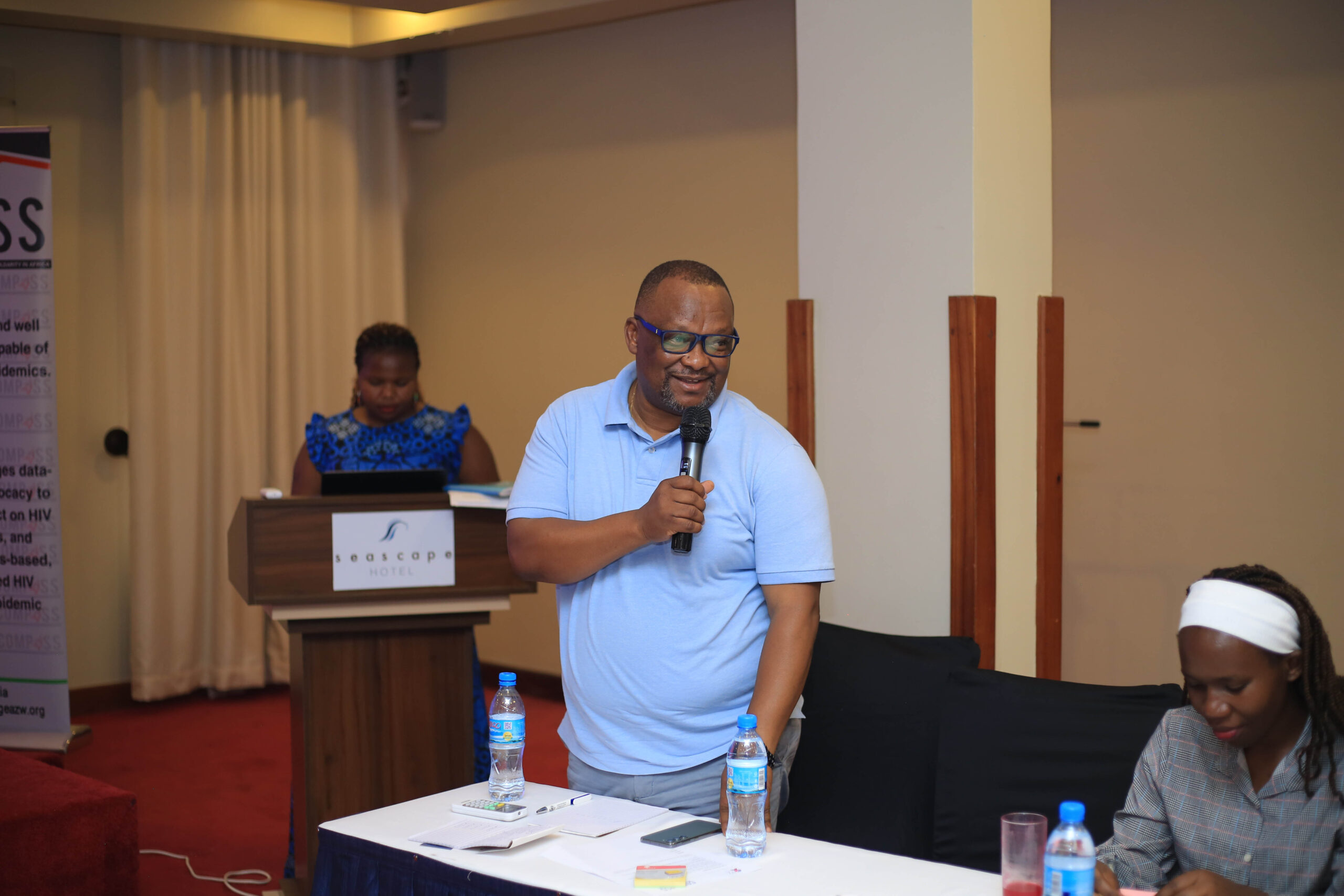
The coalition operates where change matters most. Across these priorities, its advocacy focuses on improving how resources are allocated and used, ensuring responsible and accountable transitions from external financing, and protecting hard-won HIV and health gains from emergencies and emerging health threats.
Rooted in country leadership and connected across borders, COMPASS continues to build an advocacy model capable of responding to evolving health challenges and expanding across Africa.
COMPASS supports three country coalitions and keeps them strong and central to the movement.
Country coalition in Zimbabwe, supported by COMPASS Africa.
Country coalition in Malawi, supported by COMPASS Africa.
Country coalition in Tanzania, supported by COMPASS Africa.

An Africa where accountable and responsive health systems enable access to affordable, inclusive, and equitable health services for all.
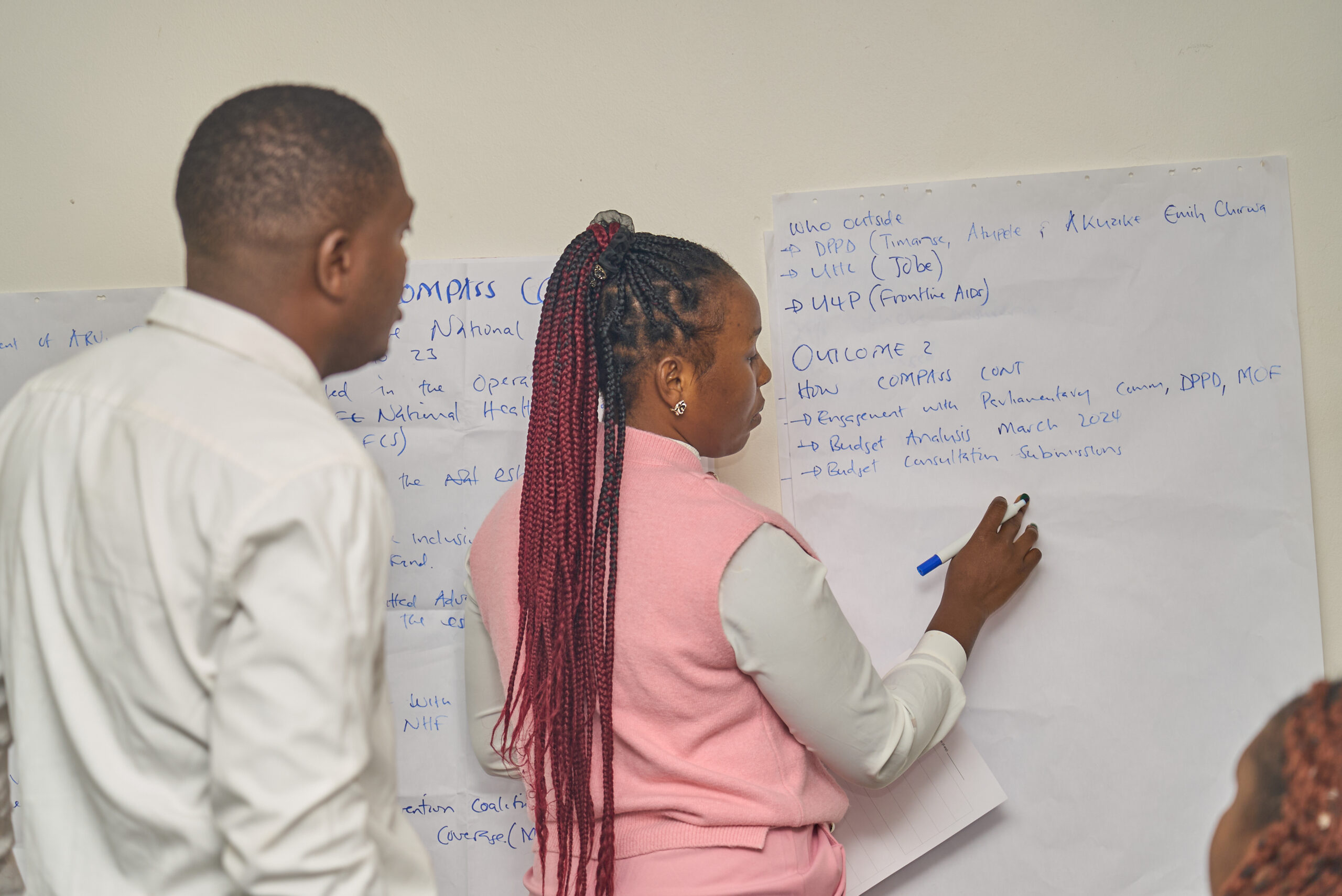
To build coalition power that turns community evidence into collective action, shaping policy, unlocking health investment, strengthening health systems and holding decision-makers accountable.
Transforming policy, health financing, community and health systems.
National health budget shares and domestic HIV financing increased across Malawi, Tanzania and Zimbabwe.
Domestic pathways for financing civil society and community-led services advanced through the AIDS Trust Fund in Tanzania and the National AIDS Trust Fund in Zimbabwe.
Seven PEPFAR COP cycles and three Global Fund funding cycles influenced across priority-setting, funding requests, implementation and transition accountability.
African health priorities carried into global decisions. Country priorities and community evidence informed advocacy targeting the Global Fund Board, US Congress, PEPFAR and the Pandemic Fund.
Community power embedded in health governance and accountability. Three national community-led monitoring systems institutionalised and 2 landmark health-governance gains secured. The six mechanisms are:
Choose an area to see selected examples from Malawi, Tanzania, Zimbabwe and beyond.
Laws, Policies and Systems Advanced
COMPASS advocacy has contributed to changes in the legal and policy environment governing equitable access to HIV and health services. These results span legislation, national strategies, technical guidelines, health interventions and implementation standards.
Advocacy contributed to the amendment of HIV legislation to enable HIV self-testing and reduce the age of consent for HIV testing from 18 to 15. Transgender people were also recognised as a distinct population in national HIV planning.
Coalition advocacy contributed to national guidance covering HIV self-testing, PrEP, tuberculosis preventive therapy, integrated SRH and HIV services, and community ART refill groups.
A sustained campaign addressing age and consent barriers helped place children’s and adolescents’ access to health services on the legislative agenda. The Children’s Amendment Act made it an offence for parents or guardians to deny children necessary medical treatment. The Medical Services Amendment Act, 2026 further strengthened children’s rights and protections within the health system, including penalties for obstructing treatment considered to be in a child’s best interests.
This legislative progress complements Zimbabwe’s adoption of six-month ART dispensing in national treatment guidance, the Advanced HIV Disease Scale-Up Plan and an equity-centred pathway for introducing long-acting HIV prevention.
Together, these changes show how COMPASS coalitions move community-defined barriers into legislative reform, national policy and standards that strengthen access, choice and accountability.
Health Financing, Workforce and Transition Accountability Advanced
COMPASS has moved health-financing advocacy beyond calls for larger budgets. Country coalitions engage across the financing cycle, shaping revenue mobilisation, allocation, expenditure, social contracting and investment in the health workforce, while holding governments and funders accountable for responsible transitions from external assistance.
The health share of the national budget increased from approximately 9% in 2019 to 12% in 2025. Advocacy also contributed to a 2% motor-vehicle insurance levy for health, MWK1 billion for antiretroviral medicines and MWK4.3 billion for the HIV response.
Malawi also advanced the establishment of a National Health Fund and secured greater devolution of medicine budgets, strengthening accountability for whether approved resources reach districts and health facilities.
The AIDS Trust Fund increased from TZS1 billion in 2021/22 to TZS5.28 billion in 2025/26. New health levies direct 70% to the AIDS Trust Fund and 30% to the Universal Health Fund.
Tanzania allocated 10% of the AIDS Trust Fund to social contracting, creating a domestic pathway for financing civil society and community-led services. Advocacy also supported recruitment and deployment of additional health workers and strengthened national guidance for health-workforce volunteerism.
Sustained advocacy contributed to an increase in the health share of the national budget from 12.7% in 2021 to 14.9% in 2022 and helped institutionalise social contracting through the National AIDS Trust Fund.
Zimbabwe also advanced parliamentary oversight of health financing through public expenditure tracking and an independent mechanism for monitoring budget allocations, releases and expenditure.
COMPASS coalitions monitor whether domestic and international commitments are implemented, identify gaps between approved budgets and actual expenditure, and press for corrective action where resources do not reach intended services and populations.
As external assistance declines, COMPASS is strengthening accountability for responsible transition. This includes engaging in Global Fund reprioritisation, monitoring changes in PEPFAR support, advocating for government absorption of essential health workers and protecting financing for community-led services.
Following the 2025 US foreign-assistance stop-work orders, country coalitions documented disruptions to services, commodities, community programmes and the health workforce. This evidence informed national contingency advocacy and was channelled through global partners to support efforts to protect and restore critical interventions.
Together, these outcomes demonstrate a shift from advocacy for more funding to influence over how resources are mobilised, allocated, released, spent and transitioned. COMPASS is helping build financing systems that can sustain essential services, protect community-led delivery and strengthen accountability as countries assume greater responsibility for their health responses.
Major Global Health Investments Influenced
Across seven PEPFAR planning cycles and three Global Fund funding cycles, COMPASS coalitions have translated community evidence into funded priorities, programme targets and accountability commitments.
This influence extends across the investment cycle, from defining priorities and developing funding requests to grant reprioritisation, implementation monitoring and accountability for responsible transition.
Almost 80% of the priorities in the People’s COP21 were reflected in the final plan. These included restoring disrupted services, increasing the PrEP target from 16,000 to 19,195, expanding cervical-cancer screening and financing community-led treatment literacy.
PEPFAR’s community-led monitoring allocation increased from US$500,000 in COP21 to US$1.6 million in COP23. The national PrEP target increased from 103,000 to 694,000, while the PrEP budget increased from US$10 million to US$18 million.
Tanzania’s Global Fund Grant Cycle 7 investment included US$1.3 million for community-led monitoring, US$9.3 million for human resources for health, US$5.3 million for harm reduction and US$38.6 million for programmes serving adolescent girls and young women.
COP21 increased PrEP targets by 70%, added US$3 million for condoms and supported the expansion of viral-load coverage.
Zimbabwe’s Global Fund Grant Cycle 7 investment doubled MSM outreach sites from 12 to 24, recognised people who use and inject drugs as a key population and included 15,757 adolescent girls and young women for PrEP between 2024 and 2026.
Through this sustained engagement, COMPASS has helped ensure that major global health investments respond more directly to community priorities, address persistent service gaps and protect essential HIV and health services through financing transitions.
Health Services and Delivery Systems Strengthened
COMPASS connects policy and financing advocacy to the systems through which prevention, treatment, care and support reach communities. Coalition advocacy has contributed to the adoption, expansion and improvement of differentiated, integrated and community-based approaches.
Advocacy supported the expansion of cervical-cancer screening, contributed to a reduction in treatment default from 49% to 15% in targeted districts and advanced Community ART Refill Groups from policy engagement to implementation and scale-up.
Advocacy contributed to the establishment of seven additional medication-assisted treatment satellite sites and supported 508 community health workers across 137 health facilities.
Tuberculosis preventive therapy expanded to 16 health facilities in Umzingwane, strengthening access to integrated HIV and TB services.
The response progressed from no PEPFAR-supported reporting sites to 136 sites during COMPASS 2.0. Coalition advocacy subsequently contributed to adoption of a national Advanced HIV Disease Scale-Up Plan with a community model of care and implementation indicators.
Differentiated-service coverage increased from 41% in 2022 to 47% in 2023, reaching more than 472,000 people.
Coalitions have advanced integrated HIV, TB and sexual and reproductive health services, differentiated delivery models and national readiness for long-acting HIV prevention technologies.
These outcomes demonstrate how COMPASS translates community priorities into service-delivery models and system improvements that bring quality health services closer to the people who need them.
Community Governance, Inclusion and Decision-Making Power Institutionalised
COMPASS has helped move communities beyond consultation and participation into sustained roles within national governance, financing and accountability systems for HIV and Health. Communities now generate evidence, set priorities, influence resource decisions and participate directly in structures responsible for shaping and overseeing health responses.
The Civil Society Advocacy Forum expanded from 18 to 68 organisations, strengthening collective civil society influence over government policy, parliamentary engagement and PEPFAR and Global Fund investments.
Community-led monitoring was incorporated into national HIV strategies. Standardised tools, a shared database and guidance disseminated across 65 councils strengthened the formal use of community evidence in national planning and accountability.
COMPASS partners played a central role in establishing an autonomous Key and Vulnerable Populations Forum, bringing together more than 30 community organisations. The Government of Tanzania and US Government recognised the Forum as a formal partner for policy and programme engagement, creating a sustained pathway for affected communities to shape decisions concerning their health. Through the Forum, key and vulnerable population representatives gained access to national technical processes, including review of the Integrated Bio-Behavioural Survey protocol and engagement on population estimates, policies and programmes. This moved community participation beyond periodic consultation towards structured technical and policy influence.
Community-led monitoring brought together 29 partners operating across 10 provinces, 33 PEPFAR-supported districts and 210 health facilities, supported by 266 community data collectors.
COMPASS conceived and helped establish Zimbabwe’s Technical Working Group on Public Health and Emerging Issues, Sexual and Gender-Based Violence, Sexual and Reproductive Health, and HIV and AIDS for Persons with Disabilities. Convened by the National AIDS Council and co-chaired by the ministries responsible for Social Welfare and Health, it provides a national mechanism for mobilising resources, strengthening systems and advancing health interventions for persons with disabilities.
Advocacy led by My Age Zimbabwe also contributed to revision of the national DREAMS assessment tool, enabling programmes to identify and respond to barriers affecting adolescent girls and young women with disabilities and other groups previously missed by services.
COMPASS secured a dedicated youth seat with voting rights on the Global Fund Country Coordinating Mechanism, delivering an advocacy priority that communities and young people had pursued for more than a decade. The voting seat gives young people formal authority within national Global Fund governance, including the ability to shape funding priorities, grant oversight and decisions affecting programme implementation.
These outcomes demonstrate a fundamental shift in community power. Communities are not only consulted or invited to provide evidence; they now occupy formal governance structures through which policies are shaped, resources are mobilised and allocated, programmes are overseen and decision-makers are held accountable.
Regional and Global Influence Expanded
COMPASS connects community evidence and country-defined priorities to coordinated advocacy at national, regional and global levels. Through its African and Global North partners, evidence generated in Malawi, Tanzania and Zimbabwe has informed engagement with the Global Fund Board, US Congress, PEPFAR, the Pandemic Fund and other institutions that shape global health policies and investments.
COMPASS evidence and country-defined priorities have informed engagement with the Global Fund Board, Secretariat and technical processes, strengthening advocacy for community systems, equitable access, key and vulnerable populations, health workforce investment and meaningful civil society participation.
Country coalitions developed shared positions and a Civil Society Charter to strengthen community influence throughout Global Fund funding requests, grant-making, implementation, reprioritisation and transition processes.
Through Global North partners based in the United States, country evidence from Malawi, Tanzania and Zimbabwe was carried into engagement with the US Congress, PEPFAR leadership and executive agencies.
A reverse congressional delegation enabled six young women advocates from the three COMPASS countries to engage US policymakers directly on HIV prevention, treatment and sexual and reproductive health priorities affecting adolescent girls and young women. This engagement was reinforced through a briefing with members of the US Congress and an executive briefing attended by 43 US Government officials representing the White House, Department of State, PEPFAR, USAID, CDC, Health Resources and Services Administration, Peace Corps and Department of Defense.
COMPASS country partners documented disruptions to HIV and health programmes, including the effects on community services, prevention, commodities and the health workforce. This country-level intelligence was consolidated and used by US-based global partners in advocacy with Congress and the US Government. The evidence supported wider efforts to secure waivers, restore selected lifesaving interventions and protect elements of PEPFAR programming, although substantial financing and service losses remained.
COMPASS also supported community engagement and government-led proposal development for Pandemic Fund investments in Malawi, Tanzania and Zimbabwe, helping ensure that surveillance, preparedness and response investments incorporated community priorities and protected hard-won HIV and health gains.
Coalition partners have contributed to wider pandemic-preparedness processes, including engagement with the Pandemic Fund Board, World Health Organization processes and negotiations on the global pandemic architecture.
South to South technical support and regional advocacy have extended COMPASS experience beyond its three focus countries, including expertise in social contracting, health financing, community-led monitoring, prevention advocacy and responsible transition.
Through this model, COMPASS connects community realities to the institutions controlling policy and resources. Evidence moves from communities and country coalitions to national governments, regional platforms and global decision-makers, and global advocacy remains anchored in priorities defined by African communities.
COMPASS treats Monitoring, Evaluation, Results and Learning as a core advocacy capability. Our MERL system helps coalitions understand the policy environment, develop evidence-based strategies, assess which tactics are working and adapt campaigns as conditions change.
It also tracks COMPASS contributions to changes in policies, programmes, systems and investments over time. This enables partners to demonstrate results, strengthen accountability and show the value generated by investments in advocacy.
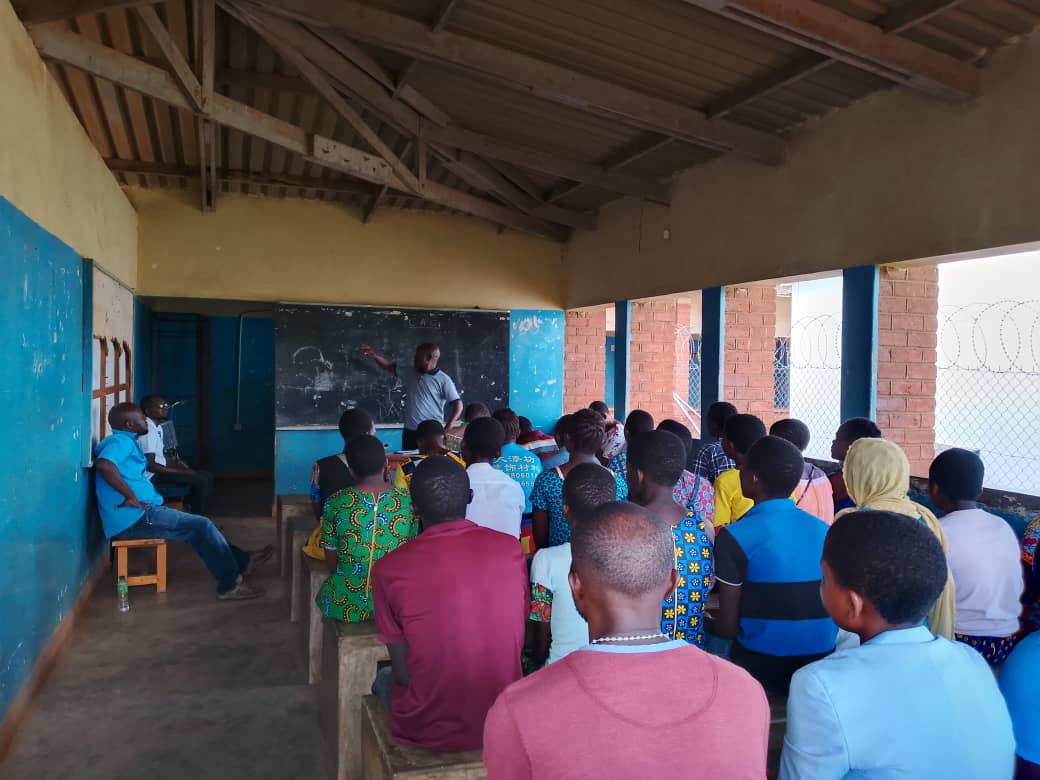
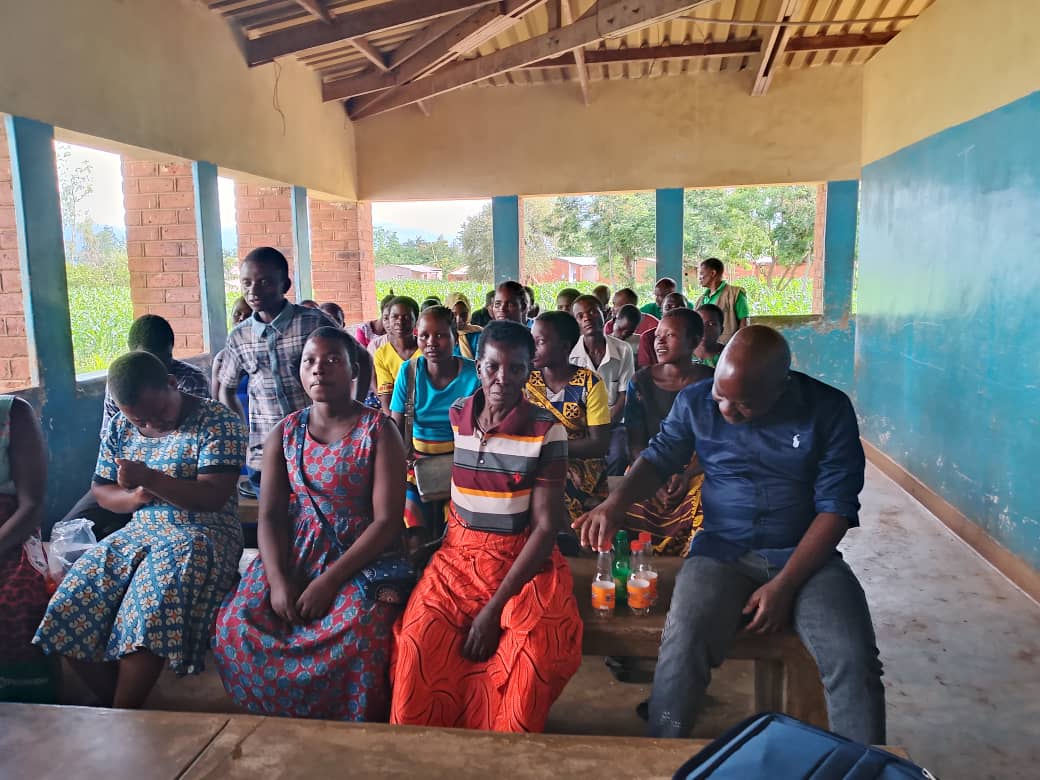
The Landscape Analysis and Strategic Action Planning Tool helps coalitions analyse the policy environment, clarify the change they seek and develop advocacy strategies grounded in country realities.
The COMPASS Coalition Advocacy Assessment Tool enables partners to identify and assess advocacy advances and setbacks against three dimensions.
The assessment helps coalitions distinguish a promising development from a substantial and lasting outcome. Partners then use the findings to define follow-up actions, determine when those actions should occur and adjust campaign tactics. Lessons are shared across the coalition to strengthen subsequent advocacy.
The Simple Participatory Assessment of Real Change enables partners to examine advocacy outcomes in greater depth. Through participatory reflection, partners identify the most significant outcomes and assess:
SPARC converts this analysis into an evidence-based account of the advocacy journey. It also identifies follow-up actions and the timeframe within which they should be pursued, ensuring that documented outcomes inform the next stage of advocacy.
The Coalition Health Scorecard assesses alignment around shared vision, mission and values, alongside governance, trust and partnership effectiveness. Findings guide coalition-strengthening actions and contributed to the development of the COMPASS governance manual and governance approach.
The MERL Champions Programme decentralises MERL by building dedicated capacity within country coalitions and partner organisations. MERL Champions support evidence generation, application of COMPASS tools, campaign reflection and consistent documentation of advocacy results.
The MERL Handbook for Advocates provides practical guidance for integrating results and learning into advocacy planning and implementation. It helps advocates define intended changes, select appropriate measures, document contribution and use evidence to refine strategy.
Outcome tracking, reflection meetings and case studies connect learning across countries. This enables COMPASS to identify effective advocacy pathways, strengthen follow-up and carry tested approaches into national, regional and global advocacy.
Explore the coalition’s work, partners and resources on the COMPASS website.
Visit compassafrica.org